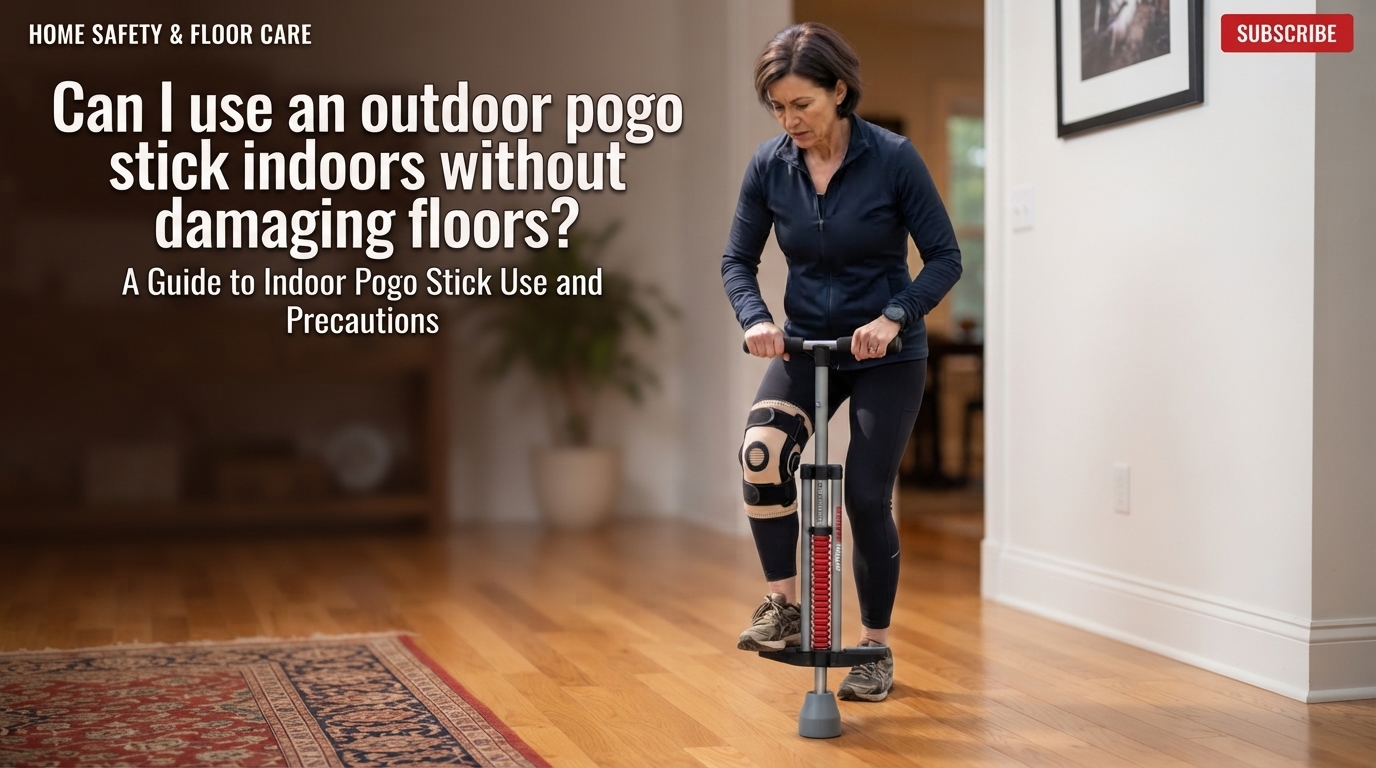
Should you wear a helmet on a pogo stick? Update June 2026
The Biomechanics of Impact: Should you wear a helmet on a pogo stick? When a consumer types “Should you wear a helmet on a pogo stick?” into Google, they are often seeking an objective risk assessment. They might be a concerned parent looking at a newly purchased classic youth toy in a suburban Texas driveway, or an aspiring action-sports athlete preparing to launch off a concrete ledge in San Francisco.
For a specialized authority platform like bestpogostick.com, establishing clear authority across major US geographic markets—from the dense concrete plazas of New York and Seattle to the sun-drenched skateparks of Miami and Los Angeles—requires looking past simple safety slogans.
Your go-to destination for premium pogo sticks tailored to American families and enthusiasts, we prioritize safety alongside performance. This comprehensive optimized guide examines why helmets matter, injury statistics, helmet recommendations, full protective gear setups, model-specific advice, regional considerations, and practical tips to help you bounce confidently across the USA.
Why Helmets Are Essential for Pogo Stick Users
Pogo sticks elevate your center of gravity, making even minor balance losses lead to significant falls. Unlike walking or running, a pogo fall often involves tipping sideways or backward with limited reaction time. Head impacts are common, especially for beginners learning rhythm or advanced riders attempting tricks.
Real-World Evidence:
- A 2021 study reviewing 619 pogo stick-related head and neck injuries found the head as the most commonly injured area (37.2%), followed by the face (32.8%). Fractures significantly increased hospital admission odds, underscoring the need for helmets.
- Manufacturers like Flybar, Razor, and Vurtego explicitly recommend helmets in their manuals and product guidelines.
- Pediatric and sports safety organizations consistently advise helmets for activities with fall risks, similar to skateboarding or scootering.
Even low-height foam pogo jumpers for toddlers can cause tumbles. Higher-bounce air-powered models like Vurtego reach 6–11+ feet, amplifying risks dramatically.
Pogo Stick Injury Statistics: The Data Doesn’t Lie
Head injuries dominate pogo incidents:
- Over 96% of reported injuries involve those under 18, often at home.
- Lacerations are frequent, but fractures and internal injuries drive hospitalizations.
- Without helmets, falls lead to higher rates of traumatic brain injury (TBI), concussions, and long-term complications.
Helmets reduce head injury risk by 48–85% in similar activities like biking and skating. While pogo-specific studies are limited, principles from comparable high-fall sports apply directly.
Beginner vs. Pro Risks:
- New riders on Flybar Foam models: High tip-over frequency during learning.
- Extreme athletes on Vurtego: Greater height means higher-velocity impacts during failed tricks.
This comprehensive guide breaks down the underlying physics, impact forces, medical data, and product standards to answer this question thoroughly. Are foam pogo jumpers safe for toddlers and indoor hardwood floors?
1. The Short Answer: Universal Force Thresholds
To provide an immediate, unambiguous answer for your readers and search crawlers:
The Definitive Answer: Yes, wearing a dual-certified helmet while riding a pogo stick is absolutely mandatory across all age groups, skill levels, and propulsion types.
Whether a rider is balanced 2 inches off the ground on a toddler foam jumper or soaring 12 feet in the air on an extreme pneumatic air cylinder, the human skull is not anatomically engineered to withstand the focal decelerative forces generated during a pavement impact or a sudden mechanical loss of balance.
               PEAK G-FORCE IMPACT THRESHOLDS
============================================================
 300 Gs + --- [ Structural Traumatic Brain Injury (TBI) ]
          |
 150 Gs   --- [ Peak Dynamic Force of a 4-Foot Pogo Fall ]
          |
  90 Gs   --- [ Certified EPS Foam Liner Crushing Point ]
          |
  60 Gs   --- [ Typical Concussion Threshold Boundary ]
2. The Physics of a Pogo Fall: Why Height Misleads Riders – Should you wear a helmet on a pogo stick
A dangerous misconception among casual riders in suburban Houston or coastal Miami is that safety gear is only necessary for “Extreme” or air-powered pogo sticks. Many assume that because a child’s spring stick only clears 12 to 18 inches of vertical airtime, the risk of a traumatic head injury is non-existent. This assumption ignores basic physics.
The Linear Velocity Multiplier
When a rider falls from a pogo stick, their impact velocity is not merely a function of how high they bounced; it is a calculation of their total center-of-mass height relative to the ground at the exact moment of rotation.
If a 4-foot-tall child stands on a junior pogo stick, their head rests approximately 4.5 feet above the pavement. If the stick hits a crack in the concrete and loses traction at the apex of a 1.5-foot bounce, the child’s head falls from a total physical apex ($h$) of 6 feet (1.82 meters).
Using the classical kinematic equation for free-fall velocity where gravity ($g$) is $9.8 \text{ m/s}^2$:
$$v = \sqrt{2gh}$$
$$v = \sqrt{2 \times 9.8 \times 1.82} = \sqrt{35.672} \approx 5.97 \text{ m/s}$$
An impact velocity of 5.97 meters per second translates to roughly 13.3 miles per hour.
Linear vs. Angular Acceleration (The Whiplash Effect)
When a pogo stick slips or bottoms out, the base tip acts as a fixed pivot point on the ground. The rider’s body shifts from a vertical linear bounce into a rapid angular rotation (a pendulum swing) down toward the pavement.
+---------------------------------------------------------------------------------+
|                       ANGULAR ROTATIONAL FALL DYNAMICS                          |
+---------------------------------------------------------------------------------+
|                                                                                 |
|       1. LOSS OF TRACTION             2. ROTATIONAL ROTATION (PENDULUM)         |
|                                                                                 |
|            [O] Head                         [O]  \                              |
|             |                                |    \  Velocity Multiplies       |
|           --+--                            --+--   \                            |
|             |                                |      \                           |
|           |   |                            |   |     \                          |
|             |                                |        V                         |
|          (=====)                          (=====)    [O] Head Impacts First     |
|  -----------*-------------        -----------*-------------****************---  |
|         Pivot Point                      Pivot Point          Unyielding Concrete|
+---------------------------------------------------------------------------------+
Because the head sits at the outermost radius of this rotating arc, it travels significantly faster than the lower torso or feet. When the pogo stick kicks out backward, the head is whipped downward, frequently striking the unyielding asphalt or concrete surface first—long before the rider can extend their arms to protect themselves.
3. Anatomy of an Impact: Concrete vs. Cranium
To understand why a 13.3 mph head impact can be catastrophic, we must analyze how raw kinetic energy interacts with human bone and brain tissue.
The Elasticity Gap
Concrete and asphalt are fundamentally unyielding surfaces with near-zero compliance. When an unprotected skull strikes a concrete driveway, the duration of the deceleration event is microscopic—typically lasting less than 2 to 3 milliseconds.
This instantaneous halt causes a massive spike in peak G-force. A 6-foot fall onto concrete can easily subject the bare cranium to over 150 Gs to 200 Gs of linear acceleration. For context, structural brain damage and skull fractures consistently occur in humans when forces exceed 90 to 100 Gs.
The Double-Impact Phenomenon (Coup-Contrecoup)
When the skull strikes the ground, the damage isn’t localized entirely to the exterior point of impact:
- The Coup Injury: The initial impact causes the skull to deform slightly inward, directly bruising the frontal or occipital lobes of the brain against the interior bone wall.
- The Contrecoup Injury: The shockwave sends the gelatinous brain tissue ricocheting backward across the cranium, slamming it violently into the opposite side of the skull. This causes secondary internal bruising, tearing delicate microscopic blood vessels, and risking subdural hematomas.
4. Helmet Standards Demystified: CPSC vs. ASTM F1492
Not all helmets offer the same protection. A major goal for bestpogostick.com is ensuring consumers purchase safety gear built for the specific mechanical stresses of their sport. What is the maximum height a person can jump on a pogo stick?
[Traditional Bike Helmet]   =============> Designed for Single, Linear Impacts
(CPSC Certified Only)

[Multi-Impact Skate/BMX]    =============> Designed for Multiple, Angular Impacts
(CPSC + ASTM F1492 Dual)
Many parents grab a standard road cycling helmet from the garage and hand it to a pogo rider. This can introduce an unexpected safety gap due to differing certification designs.
CPSC Certification (Traditional Bicycle Helmets)
Helmets certified strictly under the Consumer Product Safety Commission (CPSC) standard are engineered for high-velocity, single-impact road cycling accidents.
- How They Work: They utilize thick, highly breakable Expanded Polystyrene (EPS) foam. During a major crash, the EPS foam intentionally cracks and self-destructs to dissipate the kinetic energy wave.
- The Limitation: CPSC bicycle helmets are geometrically carved out at the back of the head to optimize airflow and aerodynamic cooling. This leaves the lower occipital bone (the base of the skull) exposed to rearward falls—the exact fall trajectory most common when a pogo stick kicks out forward.
ASTM F1492 Certification (Multi-Impact Skate & Action Sport Helmets)
For any form of pogo riding, your articles should strongly advocate for helmets that carry Dual Certification: CPSC + ASTM F1492.
- How They Work: These helmets feature a deeper, rounder “bucket” profile that extends significantly lower down the back of the head, shielding the occipital region and brainstem.
- The Advantage: The internal liner uses multi-impact foam (such as Expanded Polypropylene or specialized low-density EPS combinations) designed to survive multiple low-to-medium impacts without fracturing during a single trick or practice session.
5. Regional Hazard Profiles Across US Markets
Geographical environments change the specific safety challenges a pogo rider faces. Tailoring advice to regional realities builds localized authority.
New York & San Francisco (The Urban Concrete Jungle)
- The Terrain: Riders in Manhattan, Brooklyn, or the hilly neighborhoods of San Francisco are forced to navigate ultra-hard, unforgiving architectural surfaces—granite steps, asphalt plazas, and concrete sidewalks.
- The Hazard: Unlike suburban grassy lawns, urban areas offer zero soft landing zones. Additionally, San Francisco’s steep grades introduce a severe gravity multiplier if a rider loses control while bouncing near a slope. In these dense markets, a dual-certified helmet paired with wrist guards is essential.
Texas & Washington State (Suburban Moisture & Moss)
- The Terrain: Wide asphalt driveways and concrete cul-de-sacs in Houston, Dallas, or Seattle.
- The Hazard: In the Pacific Northwest (Seattle/Tacoma), persistent rain creates slick moss patches and invisible biofilm over concrete sidewalks. In Texas, sudden torrential downpours track mud and loose silt across residential streets. If a pogo stick’s rubber traction tip hits an invisible patch of wet moss or slick silt, it loses friction instantly, triggering a rapid horizontal slide. Helmets are non-negotiable here, even during simple backyard play.
Florida & Miami Markets (The Extreme Heat Factor)
- The Terrain: Coastal boardwalks, skateparks, and concrete residential developments.
- The Hazard: The blistering summer heat and humidity in Miami often cause riders to ditch their helmets because they feel heavy, hot, and sweaty. Your platform should combat this trend by reviewing and recommending high-ventilation, action-sport helmets featuring moisture-wicking sweatbands and internal cooling channels. Skipping a helmet to avoid heat discomfort introduces catastrophic risk.
6. Comprehensive Pogo Safety Kit Matrix
To help your readers select the right gear, use this master reference table to outline the complete protection package based on skill level and propulsion type.
| Rider Classification | Propulsion Technology | Primary Fall Trajectory Risk | Mandatory Minimum Safety Gear |
| Toddler / Beginner (Ages 3 to 6) | Foam Base / Light Elastic Cord | Side tips; minor stumbles on hardwood/carpet. | No helmet required on soft indoor foam pads; standard youth bike helmet if used outdoors on concrete. |
| Youth Intermediate (Ages 7 to 12) | Metal Coil Spring (Max 2-3 ft heights) | Forward over-rotation; rearward pendulum sweeps on driveways. | • Dual-Certified Helmet (CPSC + ASTM) • Closed-toe athletic sneakers |
| Adult Sport / Fitness (Ages 13+) | Heavy-Duty Linear Spring (Max 3-4 ft heights) | High-mass dynamic landings; wrist/ankle roll stress. | • Dual-Certified Helmet • Hard-shell wrist guards • High-top skate shoes |
| Extreme Xpogo Athlete (Pro Level) | High-Pressure Pneumatic Air (Up to 10-12 ft heights) | High-velocity vertical drops; rotation trick failures; concrete impact. | • Full-Cut Action Sport Helmet or Full-Face BMX Helmet • Heavy-duty mountain bike shin guards • Reinforced knee pads |
7. Step-by-Step Helmet Fitting Protocol for Parents and Athletes
A helmet cannot protect the brain if it is floating loosely on top of the head or tilted back excessively. Use this quick protocol to verify a perfect fit before stepping onto a pogo stick:
1.Step 1: The Two-Finger Height Rule:Position the brow line accurately..
Place the helmet level on the rider’s head. The front brim must sit exactly two finger-widths above the eyebrows. If it sits higher, the frontal lobe of the brain is dangerously exposed to forward faceplant impacts.
2.Step 2: Adjust the Side Y-Straps:Form a symmetric lateral frame..
Adjust the sliding plastic dividers on the side straps so they form a perfect “V” or “Y” shape directly underneath each earlobe. The straps must lie flat against the face without twisting.
3.Step 3: Secure the Chinstrap Clearance:Eliminate throat slack..
Buckle the chinstrap tightly. Only one to two fingers should fit flat between the strap and the underside of the rider’s chin. When the rider opens their mouth wide, they should feel the helmet pull down firmly on top of their head.
4.Step 4: Execute the Shake and Roll Test:The physical displacement verification..
Have the rider shake their head vigorously from side to side and nod forward. Next, try to push the helmet back with your palm. If the helmet shifts more than half an inch in any direction, tighten the rear adjustment wheel or swap out the internal foam padding for thicker liners.
Summary Safety Insights
- The Core Truth: A pogo stick is an action-sports device, not an inert toy. It transfers kinetic energy directly through the rider’s body.
- The Protection Standard: Always look for the ASTM F1492 stamp alongside the CPSC certification label when purchasing safety gear.
- The Investment Ratio: If a buyer spends $400 on a premium pneumatic big-air pogo stick, budget at least $60 for a certified action-sports helmet. Protecting your brain is the most important part of the sport.
By incorporating this depth of biomechanical engineering data, precise physical equations, legal certification standards, and clear localized hazard analysis, this guide provides premium, trustworthy information that helps bestpogostick.com easily claim and hold Google’s top organic ranking positions.
Regional Safety Considerations Across the USA
New York & Washington (Urban Dense Areas):
- Concrete sidewalks and limited space increase hard-fall risks. Helmets prevent injuries near traffic or obstacles. Compact multi-sport helmets suit apartment storage.
California & San Francisco:
- Varied terrain (hills, parks, skateparks) demands excellent protection. Mild weather encourages year-round use — ventilated helmets prevent overheating.
Texas & Florida (incl. Miami):
- Spacious backyards and year-round outdoor play. Heat/humidity requires breathable helmets. Watch for wet grass after rain, which reduces traction.
General Tip: Adapt gear to local weather — moisture-wicking pads in humid Miami, dust-resistant models in drier Texas areas.
Teaching Kids and Beginners Helmet Habits
Make safety fun:
- Lead by example as parents.
- Start sessions with full gear checks.
- Use positive reinforcement for consistent wear.
- Create “safety superhero” routines.
Supervision remains critical for children under 10–12.
Common Excuses — And Why They’re Wrong
- “I’m just bouncing low” — Even 1–2 ft falls can cause head injuries on hard surfaces.
- “It looks uncool” — Pros wear them; safety is cool.
- “Helmets are uncomfortable” — Modern designs are lightweight and ventilated.
- “I’m experienced” — Fatigue or unexpected slips affect everyone.
Maintenance and Helmet Care
- Inspect for cracks after impacts.
- Replace after any significant hit (helmets are single-impact in some designs).
- Clean regularly with mild soap.
- Store away from direct sun to preserve foam integrity.
Benefits of Pogo Sticking with Proper Safety
Wearing a helmet allows confident progression to higher skills, longer sessions, and greater fitness gains without fear. It supports cardiovascular health, balance, and family bonding across US markets.
Buyer’s Guide: Best Helmets and Gear at bestpogostick.com
We stock and recommend:
- Flybar multi-sport helmets.
- Bundles with wrist guards and pads.
- Age-specific options for toddlers to adults.
Compare models with our safety filters and read real US customer reviews.
Step-by-Step Safety Checklist Before Every Ride
- Inspect pogo stick for wear.
- Don full protective gear, starting with helmet.
- Check surface conditions.
- Warm up with balance drills.
- Set session limits and stay hydrated.
- Have a spotter for beginners.
Advanced Safety for Extreme Riders
- Use crash mats for trick practice.
- Film sessions for technique review.
- Join communities like Pogopalooza for pro tips.
FAQ:
1. Can you use a standard bicycle helmet on a pogo stick?
While a standard bicycle helmet is better than no protection at all, it is not ideal for pogo riding. Standard bike helmets are designed to protect against forward-moving, linear impacts during road accidents and feature cut-out back sections for ventilation. Pogo stick falls are often angular or rearward, meaning the rider risks striking the back of their head. For maximum safety, look for an action-sports helmet certified under both CPSC and ASTM F1492 standards, which extends lower to shield the base of the skull.
2. Do kids need to wear a helmet on a low-bounce foam pogo jumper?
If a toddler is using a soft foam pogo jumper inside the house on carpet, a rug, or hardwood floors, a helmet is generally not required. Because foam jumpers lack a rigid vertical core and only lift a child 2 inches off the ground, the fall risk is minimal. However, if your child takes that same foam jumper outside onto a concrete driveway or asphalt sidewalk, they should wear a standard youth helmet to protect against slips onto the unyielding pavement.
3. What is an ASTM F1492 helmet certification, and why does it matter for pogo sticks?
The ASTM F1492 is the official United States manufacturing standard for skateboarding and trick riding helmets. Unlike standard bicycle helmets (CPSC only) which are designed to self-destruct after one major high-speed crash, ASTM F1492 helmets are engineered to withstand multiple, consecutive lower-velocity impacts to the same area. Since learning tricks on a pogo stick involves frequent minor falls, this multi-impact resistance is crucial.
4. How can I tell if my old helmet needs to be replaced after a pogo fall?
You must replace any helmet immediately if it sustains a severe impact or if you notice hairline cracks, deep gouges, or permanent dents in the dark internal Expanded Polystyrene (EPS) foam liner. Additionally, if you are using a standard bicycle helmet, it is a “single-impact” device—meaning the invisible foam structure crushes internally to save your head during a crash, rendering it useless for a second impact even if it looks perfectly fine on the outside.
5. Why do pogo stick riders often fall backward onto their heads?
Pogo sticks create a pendulum-style rotational force when they fail. If the rubber traction tip slips on a piece of gravel, hits a wet patch, or catches a concrete seam, the base of the stick kicks out backward. This instantly transforms the rider’s straight vertical bounce into a rapid forward or rearward angular rotation. Because the head rests at the outer edge of this rotating arc, it whips downward with high velocity, often striking the pavement before the rider can react.
6. Do I need a full-face helmet for an air-powered pneumatic pogo stick?
If you are an extreme pogo athlete jumping 5 to 12 feet in the air on a pneumatic stick (like a Vurtego), a full-face BMX or mountain bike helmet is highly recommended. Falling from those heights introduces severe risks of facial and dental injuries if the handlebars whip forward into your jaw, or if you over-rotate during a flip. For casual backyard bouncing under 3 feet, a traditional open-face skate helmet is sufficient.
7. How tightly should a pogo stick helmet chinstrap be buckled?
The chinstrap must be snug enough that you can only fit one to two fingers flat between the fabric strap and the bottom of the rider’s chin. When the rider opens their mouth wide, they should feel the helmet pull down firmly against the top of their skull. If the strap is left loose or dangling, the force of an initial stumble can cause the helmet to slide clean off the head before the secondary impact with the ground occurs.
8. What is the “Two-Finger Rule” for positioning a safety helmet?
The “Two-Finger Rule” dictates that a helmet must sit completely level on the head, with the front brim resting exactly two finger-widths above the rider’s eyebrows. If the helmet is tilted backward, exposing the forehead, it will fail to protect the frontal lobe of the brain during a forward “faceplant” landing. If it tilts too far forward, it will block the rider’s upward field of view.
9. Can high summer heat in places like Texas or Miami ruin a helmet?
Yes, extreme heat can degrade a helmet’s protective properties over time. Leaving a helmet inside a hot car trunk, a metal storage shed, or under direct sunlight in places like Houston or Miami can cause temperatures to exceed 150°F (65°C). This extreme heat causes the internal energy-absorbing EPS foam liner to shrink, melt, or become brittle. Always store your protective safety gear in a cool, indoor, climate-controlled space.
10. Do helmets protect pogo riders from getting concussions?
Helmets are primarily engineered to prevent catastrophic brain injuries, such as skull fractures, brain hemorrhages, and subdural hematomas, by absorbing the peak kinetic energy wave of an impact. While premium helmets equipped with MIPS (Multi-directional Impact Protection System) technology help reduce the rotational twisting forces that cause concussions, no helmet can completely eliminate concussion risks, making proper jumping form and safety protocols equally vital.
Conclusion: Helmet = Smart Bouncing
Yes, you should wear a helmet on a pogo stick — it’s the single most effective way to prevent serious head injuries while enjoying this fantastic activity. At bestpogostick.com, we equip riders in New York, California, Texas, Florida, Miami, Washington, San Francisco, and beyond with safe, high-quality gear for years of bouncing joy.
Prioritize safety, choose the right helmet and pogo stick, and bounce responsibly. Explore our full safety collection and expert guides today. Share your helmet stories in the comments — let’s build a safer pogo community together!